Visas for 10 countries: tourism, study and work

A quick guide to visas for Australia, Singapore, Japan, Spain, France, Italy, Canada, New Zealand, India and South Korea — for tourism, study and work. Updated October 2026.
Your passport matters most. The same trip can be visa-free for one traveller and require a full visa application for another. For each country below we note what typically applies to UK citizens, EU citizens and Latin American citizens — but always confirm the rules for your exact nationality on the official government website before you book.
Where to apply from. In all the countries below you can usually apply from your country of citizenship or residence, or from a third country where you hold legal residence. If you apply from a country other than your country of citizenship, attach proof of your legal residence there (for example, a residence card).
1. Australia
Almost all applications are lodged online and the result is an electronic authorisation linked to your passport, with no sticker. Define the purpose of your trip correctly from the start: choosing the wrong category often leads to a refusal.
- Tourism: UK and EU citizens can use the free eVisitor (subclass 651); holders of ETA-eligible passports (e.g. USA, Canada, Japan, Singapore) use the ETA (subclass 601) via the app. Latin American passports are not eligible for either, so most Latin Americans apply for the Visitor visa (subclass 600, Tourist stream) — for holidays, cruises and visiting friends or family. No work; study of up to 3 months is allowed. The length of stay is stated in the grant letter.
- Study: Student visa (subclass 500) for a course at an Australian institution. You need a Confirmation of Enrolment, OSHC health cover, proof of funds and Genuine Student answers. Work hours are limited while your course is in session.
- Work: Skills in Demand visa (subclass 482) — you need an Australian employer, sponsorship and a nominated position. Young people from partner countries can apply for a working holiday visa: the 417 (e.g. UK, Ireland, France, Germany, Italy) or the 462 (e.g. Spain, Argentina, Brazil, Chile, Ecuador, Peru, Uruguay).
Documents: passport, online application and fee, photo, proof of funds, itinerary or invitation; for study — CoE, OSHC, education records, GS answers; for work — job offer, nomination, CV, diplomas, experience, English results; translations, medical checks and police certificates if requested. Biometrics are collected only if you receive a request letter, at the centre indicated.
2. Singapore
Singapore distinguishes between an entry visa, the short-term Visit Pass and long-term passes. An entry visa does not by itself entitle you to enter: the length of stay is decided at the border and shown in your electronic Visit Pass.
- Tourism: UK, EU and Latin American citizens do not need an entry visa for short visits; a visa is required only for a limited list of nationalities. Almost all visitors must submit the online SG Arrival Card before arrival. Work is not allowed.
- Study: full-time study requires a Student's Pass after you have been accepted. Very short courses may fit within a Short-Term Visit Pass.
- Work: Employment Pass, S Pass or Work Permit, depending on the role, salary and sector. The employer applies; once approved, the candidate receives an In-Principle Approval (IPA) letter, enters Singapore and completes the formalities.
Documents: passport, photo, application form, bookings and itinerary, proof of funds and onward travel; for study — letter of acceptance and proof of funds; for work — candidate's consent, contract, diplomas and experience; medical examination if stated in the IPA. If you need a tourist visa, you apply through an authorised visa agent in your country or through a local contact in Singapore. Biometrics are taken at the border or in Singapore.
3. Japan
Japan draws a clear line between short visits and long-term status. For study and work you usually need a Certificate of Eligibility (COE), which your host institution or employer in Japan obtains in advance.
- Tourism: Temporary Visitor status — tourism, visits and unpaid business meetings, usually up to 90 days. UK and EU citizens can enter visa-free. So can citizens of many Latin American countries, including Argentina, Brazil (with an ICAO-compliant e-passport; the arrangement has been extended to 2029), Chile, Costa Rica, Mexico and Uruguay, as well as several Central American and Caribbean countries. Uruguayan citizens should check that their passport type is accepted for visa-free entry. Citizens of countries not on the exemption list (or advised by Japan to obtain a visa in advance, such as Colombia) apply for a short-term visa. Paid work is not allowed.
- Study: Student status with a COE through the school, followed by the visa application. Proof of tuition payment and funds for living costs (or a sponsor) are key.
- Work: statuses such as Engineer/Specialist in Humanities/International Services, Skilled Labor, Highly Skilled Professional or Intra-company Transferee; the employer obtains the COE, then you apply for the visa.
Documents: passport, application form, photo, itinerary, proof of funds, invitation and sponsor's documents if relevant; for study — COE, enrolment, proof of payment; for work — COE, contract, diplomas, CV. Where to apply: at a Japanese embassy or consulate, through an accredited agency or visa centre, or online through the eVISA system where available for your nationality and place of residence. Fingerprints are taken on arrival.
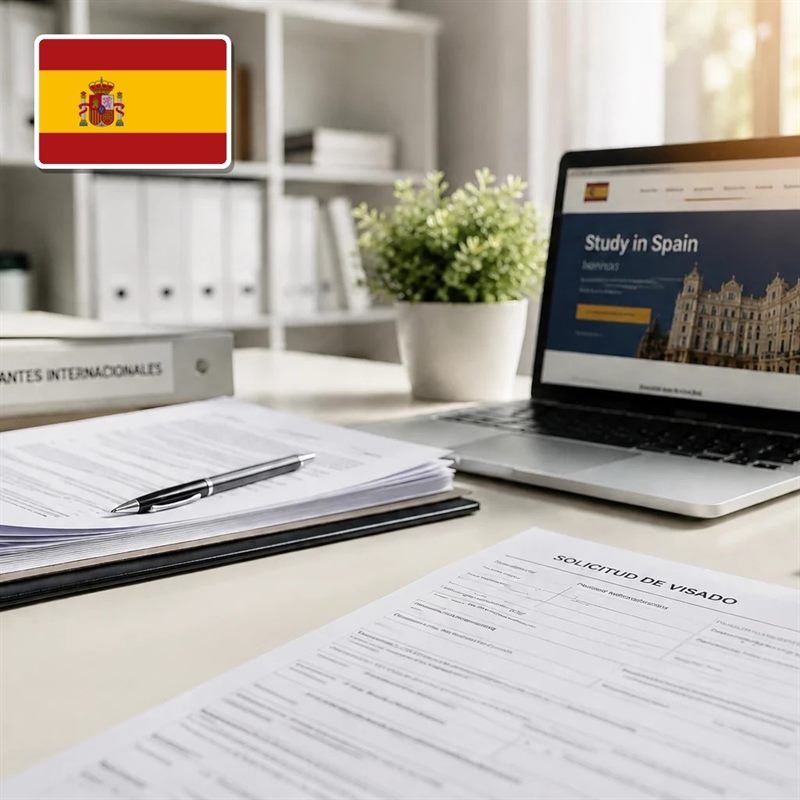
4. Spain
Spain is part of the Schengen Area: short stays are limited to 90 days in any 180-day period. For study and work beyond 90 days you need a national (type D) visa or a residence authorisation.
- Who needs a visa: EU/EEA and Swiss citizens need no visa and can live, study and work freely (registering if they stay more than 3 months). UK citizens can visit visa-free for up to 90 days in 180, but need a national visa for longer stays, study or work. Most Latin Americans — including citizens of Mexico, Argentina, Brazil, Chile, Colombia, Peru and Uruguay — can visit visa-free for up to 90 days; others, such as citizens of Bolivia, Ecuador, Cuba and the Dominican Republic, need a Schengen (type C) visa.
- Tourism: visa-required travellers apply for a Schengen C visa — purpose, itinerary, accommodation, travel insurance, funds and intention to leave on time. Visa-free travellers should also be ready to show these at the border.
- Study: courses of up to 90 days — on a Schengen visa or visa-free entry; 91 days or more — a national student visa or, if you meet the conditions, an online application from within Spain. Accreditation, course hours, insurance and funds matter.
- Work: employment requires an employer and a work authorisation; remote work for foreign clients can be done on the digital nomad (international teleworking) visa. A tourist or student visa does not replace a work authorisation.
Schengen in 2026: EES and ETIAS. Since October 2025 the Entry/Exit System (EES) registers non-EU short-stay travellers' fingerprints and facial images at the Schengen external border, replacing passport stamps. ETIAS — an online travel authorisation for visa-exempt travellers, including UK citizens and visa-free Latin Americans — is not yet in operation at the time of writing; the EU will announce the start date in advance, so check the official travel-europe.europa.eu website before you travel.
Documents: passport, application form, photo, accommodation, insurance, proof of funds, employment certificate; for study — enrolment, programme, proof of payment; for work — contract, authorisation, employer's documents; translations, apostilles, police certificate and medical certificate for long stays. Visa applications are lodged at a visa centre or consulate with biometrics; after arriving on a D visa you usually need to obtain a TIE (foreigner identity card).
5. France
Applications are prepared on the France-Visas portal. Stays of up to 90 days fall under the Schengen (type C) visa rules; for study and work, the length of stay determines the type of visa.
- Who needs a visa: EU citizens need none. UK citizens and most Latin Americans can visit visa-free for up to 90 days, but need a long-stay visa for studies or work beyond 90 days. Citizens of visa-required countries need a Schengen visa even for tourism.
- Tourism: tourist or private visit visa — itinerary, accommodation, insurance, funds and ties to your country of residence.
- Study: up to 3 months — short-stay visa (or visa-free entry if eligible); 3–6 months — temporary long-stay visa; more than 6 months — long-stay visa equivalent to a residence permit (VLS-TS). You need proof of enrolment, funds and accommodation.
- Work: for assignments of up to 90 days a short-stay visa may be possible, but the employer often has to obtain a work authorisation first; for contracts longer than 90 days — a long-stay visa (salarié or travailleur temporaire).
Documents: passport, France-Visas form, photo, accommodation, insurance, funds, proof of employment or studies; for study — enrolment and, where applicable, the Campus France procedure (Études en France); for work — authorisation and contract; translations if documents are not in French or English. All French visas are biometric: applicants aged 12 and over provide a photo and fingerprints.
6. Italy
A Schengen (type C) visa covers stays of up to 90 days in any 180-day period; a national (type D) visa covers longer stays. After arriving on a long-stay visa you must apply for a permesso di soggiorno (residence permit).
- Who needs a visa: EU citizens need none. UK citizens and most Latin Americans can visit visa-free for short stays but need a national visa to study or work long term.
- Tourism: type C visa when Italy is your main destination — itinerary, accommodation, insurance, funds and return travel.
- Study: up to 90 days — a Schengen study visa (or visa-free entry if eligible); longer — a national D visa followed by the permesso di soggiorno.
- Work: lavoro subordinato (employment) or lavoro autonomo (self-employment); many routes are linked to annual quotas and a prior work authorisation (nulla osta).
Documents: passport, application form, photo, itinerary, accommodation, insurance, funds, proof of employment; for study — enrolment, proof of payment, accommodation; for work — contract, nulla osta, employer's documents; translations and legalisation. Applications are lodged at a consulate or visa centre with biometrics.
7. Canada
Canada distinguishes between the document that allows you to travel and the permit that allows you to study or work. The final decision on entry is always made by a border officer.
- Tourism: UK citizens and citizens of EU countries need an eTA (electronic travel authorisation) to fly to Canada (for Romania, only with an electronic passport). Chilean citizens also need only an eTA. Citizens of Argentina, Brazil, Costa Rica, Mexico, Panama and Uruguay can get an eTA only if they travel by air and have held a Canadian visa in the last 10 years or currently hold a valid US visa of a qualifying type (for example, a B1/B2 visitor visa); otherwise, or when arriving by land or sea, they need a visitor visa (TRV). Most other Latin Americans (e.g. Colombia, Peru, Ecuador, Bolivia) need a visitor visa. You must show a temporary purpose, funds, ties to your country of residence and intention to leave.
- Study: study permit for a designated learning institution (DLI). In 2026 the key elements are the letter of acceptance, proof of funds, a provincial/territorial attestation letter (in most cases), biometrics, and health and security checks.
- Work: work permit — employer-specific (often requiring a job offer and an LMIA or an exemption) or an open work permit under special programmes, such as youth mobility (International Experience Canada) for partner countries. Working on a visitor visa or eTA is not allowed.
Documents: passport, online forms, photo, proof of funds, travel history, purpose of trip; for study — letter of acceptance, attestation letter; for work — job offer, LMIA, contract, CV; police certificates and medical exam if requested. Applications are made online; biometrics are given at a visa application centre after you receive a request letter.
8. New Zealand
Visitors either need a Visitor Visa or, if they hold a passport from a visa waiver country, an NZeTA; study and work require separate visas. The key test is genuine intentions: a real purpose for your trip and compliance with your visa conditions.
- Tourism: UK citizens (up to 6 months), EU citizens and citizens of other visa waiver countries (usually up to 3 months) travel with an NZeTA, which is requested online together with the International Visitor Levy. In Latin America, citizens of Argentina, Brazil, Chile, Mexico and Uruguay are on the visa waiver list; other Latin Americans apply for a Visitor Visa. Work is not allowed; study of up to 3 months is permitted. You must show funds, travel plans and the means to leave.
- Study: Student Visa — offer of place, tuition payment, funds, insurance, health and character. Work rights depend on the course.
- Work: Accredited Employer Work Visa — an accredited employer, a suitable job offer, qualifications and the required salary. Young people from partner countries — including the UK, many EU countries and several Latin American countries — can apply for a Working Holiday visa.
Documents: passport, photo, online application, proof of funds, evidence of onward travel; for study — offer of place and insurance; for work — job offer and employer details; medical exam, chest X-ray and police certificates if required; translations into English. Applications are made online to the New Zealand government (INZ); fingerprints are usually not required. All travellers also complete the New Zealand Traveller Declaration before arrival.
9. India
India makes wide use of the e-Visa, which is available to citizens of the UK, the EU and most Latin American countries — but not every purpose of travel qualifies for an electronic visa.
- Tourism: e-Tourist Visa — holidays, visits, short informal courses, yoga and unpaid volunteering. Options of 30 days, 1 year and 5 years (availability may vary by nationality).
- Study: short courses — e-Student Visa; full degree programmes — a regular Student Visa with an admission letter and proof of funds.
- Work: only an Employment Visa — an Indian employer, a contract and relevant qualifications. The e-Business Visa covers meetings and conferences, not employment.
Documents: passport, online application, photo, passport scan, ticket and proof of funds; for study — admission letter; for work — contract and CV. The e-Visa is requested online on the official Indian government portal and the result is sent by email; regular visas are applied for through the online visa portal and the Indian mission (or its service provider) in your country of application.
10. South Korea
South Korea combines visa-free entry with the K-ETA electronic travel authorisation, the C-3 short-term visa and long-term statuses for study and work. Your visa code determines the documents you need and the registration required in Korea.
- Tourism: citizens of visa-exempt countries need a K-ETA unless a temporary exemption applies. Until 31 December 2026, 22 countries and territories are temporarily exempt — including the UK, the USA, Canada, Spain, France, Germany, Italy, the Netherlands, Belgium, Austria, Denmark, Finland, Norway, Sweden and Poland. Citizens of EU countries not on that list (e.g. Portugal or Ireland) and of visa-exempt Latin American countries (such as Mexico, Chile, Colombia, Peru, Brazil and Argentina) must apply for a K-ETA before travel. Citizens of visa-required countries apply for a C-3 visa for tourism, visits and business trips without employment, or for medical treatment. Check whether the exemption is extended if you travel in 2027.
- Study: D-2 for higher education, D-4 for language courses. After entering for a long stay you must register as a foreign resident.
- Work: the E series — E-7 for professionals, E-2 for foreign language teachers, E-9 under government programmes. You need an employer, a contract and, in some cases, a Confirmation of Visa Issuance.
Documents: passport, application form, photo, itinerary, proof of funds; for study — admission letter, diplomas; for work — contract, employer documents, licences; translations and apostilles. The K-ETA is requested online; visas are issued through a consulate, a visa application centre or the Korea Visa Portal. Biometrics are taken on arrival and at registration.
How Via Globally can help
Via Globally is a private visa agency (not a government body) working online and from offices in Moscow and Barcelona. The final decision is always made by the authorities of each country, but good preparation makes a real difference.
- we help you choose the right visa — or confirm that you only need an electronic authorisation — based on your nationality and the purpose of your trip;
- we advise you on where to apply from: your country of residence or a third country where you hold legal residence;
- we prepare a document file tailored to the requirements of the specific consulate or online system;
- we review the risk factors for refusal and support you through the application.
Free consultation: WhatsApp +34 691 527 216 · viaglobally.com
Need help with your documents?
We will look at your case, suggest the right visa and help you prepare the documents. The first consultation is free.
Submit a requestVia Globally is a private visa agency, not a government body or a consulate. Visa decisions are made by the consulate or the competent authority; government and consular fees are paid separately. The information is current as of the publication date — rules may change.